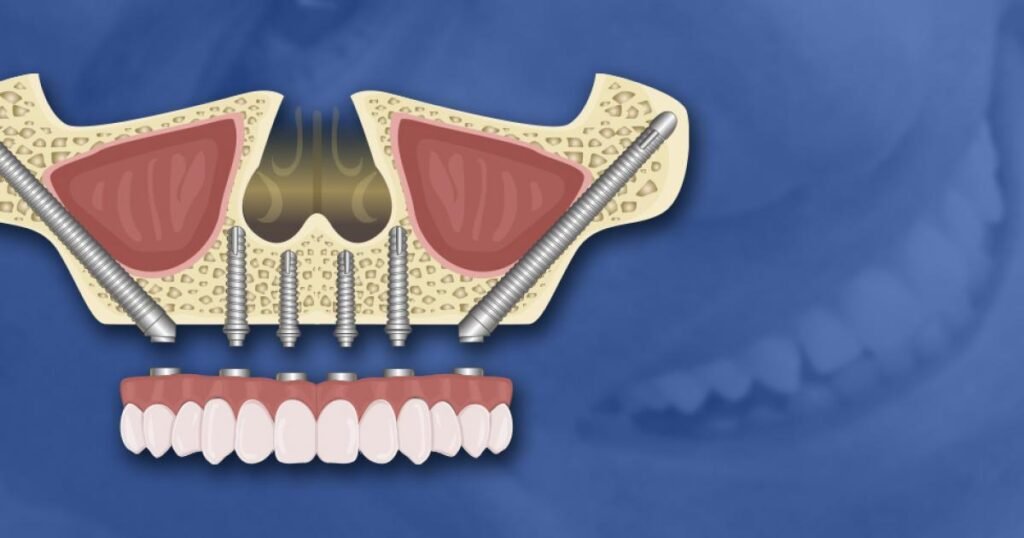
For many patients, tooth loss in the upper jaw comes with a major challenge: progressive bone shrinkage. Over time, this bone loss can become so severe that conventional dental implants are no longer possible without extensive grafting. Zygoma implants give these individuals a realistic, long-term alternative that avoids complex surgeries and restores full oral function.
Zygoma implants differ from traditional implants because of their length and anchorage point. While regular implants are placed into the jawbone, zygoma implants are anchored into the zygomatic bone. This bone is located in the upper facial structure and remains strong even in cases of severe resorption. Its density provides exceptional stability, making it a dependable support structure for full-arch restorations.
Patients who have worn dentures for years often face challenges such as poor fit, friction sores, instability, and loss of chewing power. Eating becomes difficult, and many avoid certain foods altogether. Zygoma implants address all these problems by providing a firm base for fixed prosthetic teeth. Once the prosthesis is secured, patients can smile and eat confidently without worrying about slipping or discomfort.
Another advantage of zygoma implants is that they significantly reduce treatment timelines. In many cases, immediate loading is possible, allowing patients to receive a new set of fixed teeth on the same day. This approach not only enhances comfort but also provides instant functional and aesthetic improvement.
The technology behind zygoma implants has also evolved rapidly. Advanced imaging, navigation systems, and digital planning tools ensure precise placement. This level of accuracy makes the treatment safer and more predictable. Surgeons can assess the anatomy, evaluate sinus structures, and design a surgical path that avoids complications.
Patients who may benefit from zygoma implants include those with:
The procedure is typically performed under local anesthesia with sedation or general anesthesia based on patient preference. Once the implants are placed, a fixed bridge is attached either immediately or shortly afterward. Over the next few months, the implants integrate with the bone, providing long-term stability.
Recovery is generally smoother compared to bone graft procedures. Mild swelling and discomfort are common but manageable. Most patients resume daily activities within a few days. Proper oral hygiene and routine dental visits are essential for maintaining implant health and overall oral function.
Beyond functional benefits, zygoma implants also restore facial balance. When the upper jaw loses bone, the midface can look hollow, and lips may appear collapsed. A fixed prosthesis supported by zygoma implants brings back fullness, supporting facial muscles and enhancing appearance. Patients often report looking younger and feeling more confident after treatment.
Long-term studies have shown that zygoma implants are highly successful, even in complex cases. Their ability to bypass compromised bone makes them a dependable treatment option for restoring smiles in situations where traditional techniques fall short.
For patients who feel limited by bone loss or have been told implants aren’t possible, zygoma implants provide a new path forward. They deliver stability, function, aesthetics, and comfort—all essential elements of a healthy, confident smile. This advanced technique continues to transform lives, proving that even the most challenging dental conditions can be overcome with modern implant solutions.