A brighter smile is something most people wish for, but the journey to get there can feel confusing. With so many whitening options—home remedies, over-the-counter products, and professional treatments—knowing what genuinely works and what is safe becomes essential. Teeth whitening is more than just aesthetics; it is also about understanding your dental health, enamel condition, and what your teeth can handle comfortably.
The first thing to know is that stains don’t all behave the same way. Surface-level stains from tea, coffee, red wine, and tobacco sit on the outer enamel, while deeper stains settle inside the tooth over time. External stains respond easily to whitening treatments, while internal stains need a stronger approach and sometimes even a different type of procedure.
Many people start with quick fixes found online, such as baking soda, lemon juice, or activated charcoal. While these methods may appear harmless, they can be abrasive or too acidic. Over time, they weaken enamel, make teeth sensitive, and even make stains more noticeable. So before trying DIY tricks, it’s important to understand their risks. Whitening should never come at the cost of your enamel, because once enamel is gone, it cannot grow back.
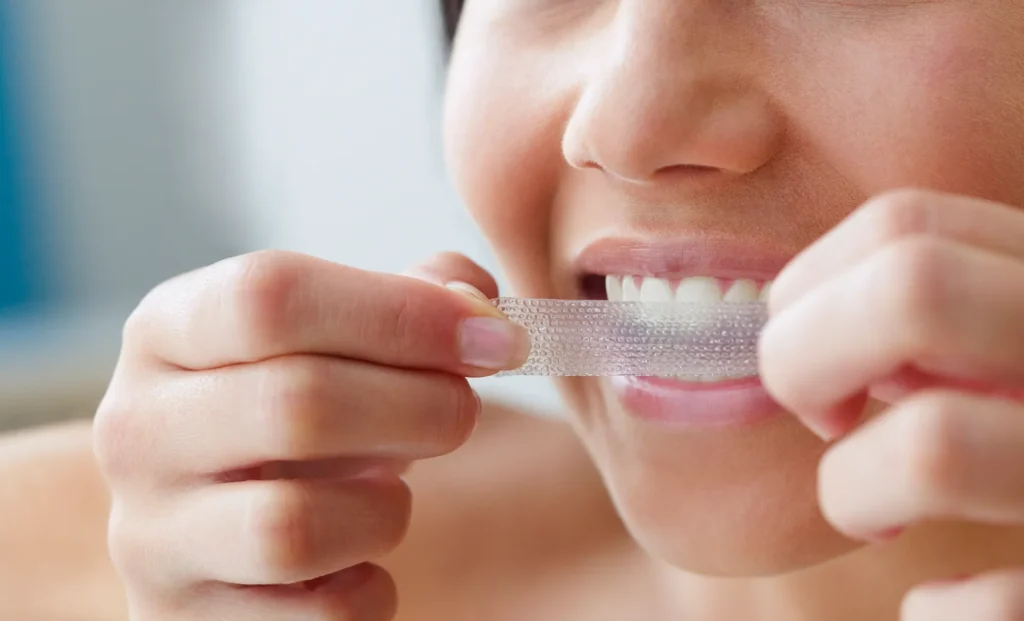
Over-the-counter whitening strips, trays, and pens are more controlled than home remedies. They use mild peroxide-based formulas that lift stains gradually. They can help, especially for mild discoloration, but results vary widely. Some people notice a shade or two of improvement, while others see little change. These products work best when used consistently and according to instructions. However, they may still cause temporary sensitivity, especially if the peroxide concentration is too strong for your teeth.
Professional whitening, offered in a dental setting, uses higher concentrations of whitening agents under controlled supervision. This means faster results, usually within one to two sessions, and better protection for your gums and soft tissues. The dentist also evaluates your oral health to determine whether whitening is suitable for you. If you have cavities, gum disease, thin enamel, or exposed roots, whitening may need to wait until those issues are treated. Safety is a major advantage of professional whitening and is one reason people choose it when they want predictable results.
Another important point to understand is that teeth whitening does not work on all materials. Veneers, crowns, fillings, and bonding do not respond to whitening agents. If your natural teeth become lighter, these restorations may stand out. This is why planning matters—sometimes whitening is done before restorative work to ensure shade matching.
Sensitivity during whitening is common, but not permanent. It usually appears when peroxide interacts with the enamel and dentin. Dentists can help reduce sensitivity by using desensitizing gels, fluoride applications, or spacing out sessions. Drinking enough water, avoiding extremely hot or cold foods, and using a soft-bristled brush also help.
Diet plays a big role in both staining and maintaining your whitening results. Foods such as berries, beetroot, soy sauce, red wine, tea, and coffee cling to enamel and darken the shade of your teeth over time. A simple rule many follow is the “white shirt rule”—if a food would stain a white shirt, it can likely stain your teeth. Rinsing your mouth with water after eating and using a straw for beverages can reduce staining. Brushing twice a day and flossing daily further protect your newly whitened smile.
The shade of your teeth also depends on genetics. Some people naturally have slightly yellower dentin, while others have whiter enamel. Whitening can brighten your natural shade but will not transform your teeth beyond what is realistic. Expecting natural whiteness instead of a “blinding white” Hollywood shade leads to more satisfying results.
Teeth whitening is not a one-time fix. Maintenance is key. Depending on your habits—such as smoking or frequent consumption of dark beverages—you may need touch-up sessions every few months or once a year. Consistency in oral hygiene is what keeps your smile bright for longer.
Before starting any whitening journey, the smartest step is a simple dental check-up. It helps you understand what kind of stains you have, what whitening method suits your enamel thickness, and whether you need any treatment beforehand. A personalized plan always gives better, safer results.
Whitening your teeth can be a confidence booster, but following safe practices ensures your smile stays healthy during the process. Instead of quick shortcuts, choosing a mindful, informed approach helps you achieve lasting brightness without harming your teeth.