Bone grafting has become an essential treatment for restoring oral health, especially for patients who need dental implants or have experienced significant bone loss. Many people don’t realize that the strength of a smile goes far deeper than what we see. The jawbone acts as the foundation for every tooth, supporting chewing, speaking, and overall facial structure. When bone weakens or disappears, restoring that foundation becomes a priority, and bone grafting offers a safe, effective solution.
The jawbone can lose volume for many reasons. One of the most common causes is losing a tooth and leaving the gap untreated. Without the stimulation that comes from chewing, the bone begins to shrink. Gum disease also plays a major role, as it gradually damages the bone supporting the teeth. Injuries, infections, or certain medical conditions can add to the problem. Once the bone deteriorates, it becomes difficult for dental treatments like implants or bridges to stay secure.
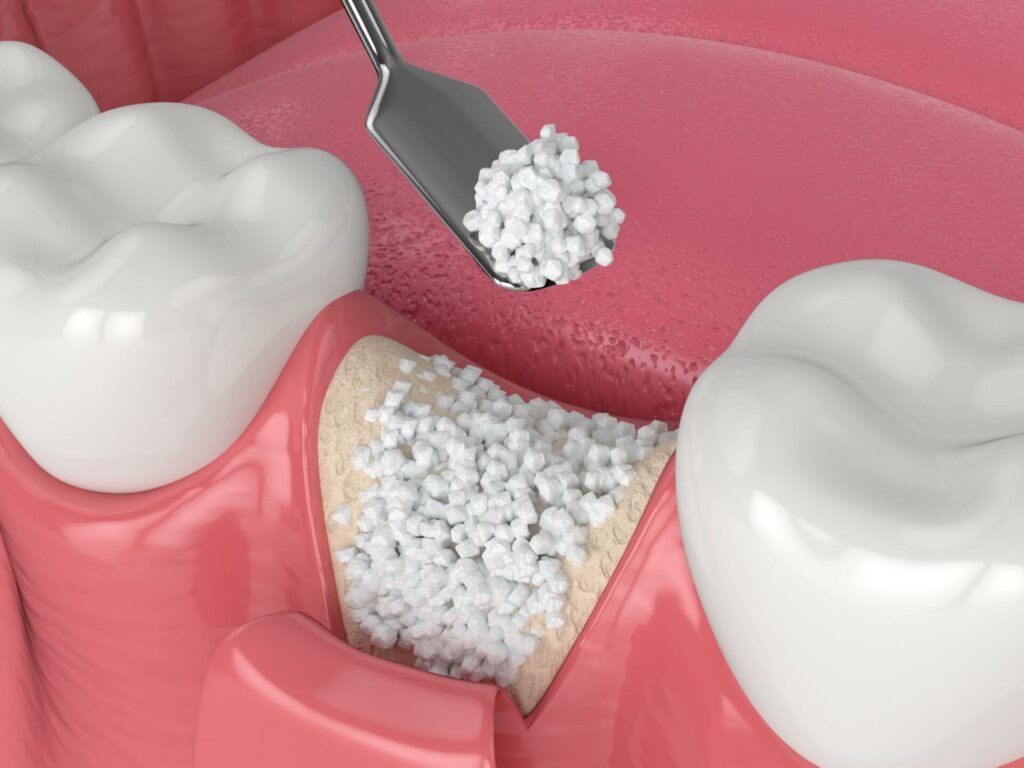
Bone grafting helps reverse this decline by encouraging the growth of new bone. During the procedure, grafting material is placed in the weakened area of the jaw. This material acts like a scaffold, guiding the natural bone to regenerate and strengthen over time. The body gradually replaces the graft with its own tissue, leaving a stable, healthy jawbone capable of supporting future restorations.
Modern dentistry offers several grafting methods tailored to each patient. A socket graft is often placed right after a tooth extraction to ensure the bone stops shrinking. Sinus lift grafts help increase bone height in the upper back jaw, an area where bone loss is very common. Ridge augmentation is designed for patients with severe bone resorption and helps rebuild the jaw’s shape before placing implants.
The biggest benefit of bone grafting is how it prepares the mouth for successful dental implants. Implants rely on strong bone to hold them firmly in place. Without enough density, they cannot integrate properly. Bone grafting provides the support implants need to function like natural teeth. With a stronger foundation, patients enjoy improved chewing power, long-term durability, and a natural-looking smile.
Beyond implants, bone grafting also has a positive impact on facial appearance and oral stability. When the bone recedes, the facial structure may appear hollow or aged. Strengthening the jaw restores natural contours and supports the surrounding tissues. A healthy bone structure keeps the bite aligned and prevents issues like shifting teeth or jaw discomfort.
The procedure itself is patient-friendly. Dentists use detailed imaging to plan the graft accurately. The treatment is performed with local anesthesia, ensuring comfort throughout. Recovery typically involves mild soreness that improves quickly with basic care. As the graft heals, the bone gradually thickens and becomes stronger. The full integration process may take several months, but the long-term benefits make the wait worthwhile.
Many patients are surprised at how much bone grafting improves their overall dental future. Instead of working around weak bone, dentists can rebuild it and create opportunities for better, more permanent solutions. Even patients who were once told they could not get implants often become candidates after a successful graft.
Bone grafting is not just a technical procedure—it’s a forward-thinking step that strengthens long-term oral health. By repairing the foundation of the jaw, it protects against further deterioration and helps secure future dental restorations. Whether someone has faced long-term tooth loss, gum disease, or jawbone damage, bone grafting opens the door to treatments that restore comfort, function, and confidence.
As dental care continues to advance, this procedure remains one of the most valuable tools for rebuilding strong, healthy smiles. It allows patients to move confidently toward permanent solutions like implants, knowing their jawbone has the support it needs. Bone grafting stands as a reminder that rebuilding from the foundation is often the most powerful way to create lasting results.